
"China Resources Bank"
200 article(s) found

Chinese Coffee History Coffee Development History of Coffee in China
According to historical records, coffee trees were first planted in Taiwan in 1884, and coffee cultivation in mainland China began in Yunnan. In 1902, a French missionary named Tian introduced seeds from Yinggong County in Binchuan County, Yunnan Province. it was successfully planted in a place called Zhu Kula, which is located on the bank of the Yushan River, a tributary of the Jinsha River. The commercial cultivation of coffee in Yunnan began in 1985, but its development is slow.

Chinese Coffee History talk about Chinese Coffee History
According to historical records, coffee trees were first planted in Taiwan in 1884, and coffee cultivation in mainland China began in Yunnan. In 1902, a French missionary named Tian introduced seeds from Yinggong County in Binchuan County, Yunnan Province. it was successfully planted in a place called Zhu Kula, which is located on the bank of the Yushan River, a tributary of the Jinsha River. The commercial cultivation of coffee in Yunnan began in 1985, but its development is slow.

The first Asian Coffee Annual meeting was held in Mangshi, Yunnan.
Coffee in China has a history of one hundred years. By the beginning of 2016, the planting area of coffee in China exceeded 1.8 million mu, with a total output of 140000 tons, accounting for 1.5% of the total global output. Yunnan has a planting area of 1.83 million mu and an output of 132000 tons, accounting for more than 95% of China's total. Coffee has become Yunnan's third largest export commodity with plateau characteristics to earn foreign exchange. Gong Jingzheng, governor of Dehong Prefecture

The basic knowledge of Coffee Culture the History of Coffee in China
According to historical records, coffee trees were first planted in Taiwan in 1884, and coffee cultivation in mainland China began in Yunnan. In 1902, a French missionary named Tian introduced seeds from Yinggong County in Binchuan County, Yunnan Province. it was successfully planted in a place called Zhu Kula, which is located on the bank of the Yushan River, a tributary of the Jinsha River. The commercial cultivation of coffee in Yunnan began in 1985, but its development is slow.

The History of Coffee in China the History of Chinese Coffee Culture
According to historical records, coffee trees were first planted in Taiwan in 1884, and coffee cultivation in mainland China began in Yunnan. In 1902, a French missionary named Tian introduced seeds from Yinggong County in Binchuan County, Yunnan Province. it was successfully planted in a place called Zhu Kula, which is located on the bank of the Yushan River, a tributary of the Jinsha River. The commercial cultivation of coffee in Yunnan began in 1985, but its development is slow.

Basic knowledge of fine coffee in Chinese coffee history
According to historical records, coffee trees were first planted in Taiwan in 1884, and coffee cultivation in mainland China began in Yunnan. In 1902, a French missionary named Tian introduced seeds from Yinggong County in Binchuan County, Yunnan Province. it was successfully planted in a place called Zhu Kula, which is located on the bank of the Yushan River, a tributary of the Jinsha River. The commercial cultivation of coffee in Yunnan began in 1985, but its development is slow.
General knowledge of Fine Coffee Culture on the History of Coffee in China
According to historical records, coffee trees were first planted in Taiwan in 1884, and coffee cultivation in mainland China began in Yunnan. In 1902, a French missionary named Tian introduced seeds from Yinggong County in Binchuan County, Yunnan Province. it was successfully planted in a place called Zhu Kula, which is located on the bank of the Yushan River, a tributary of the Jinsha River. The commercial cultivation of coffee in Yunnan began in 1985, but its development is slow.
Pacific Coffee Waffles on the Market in Pacific Coffee3 month
The courage to be responsible is a key condition for a manager
Starbucks China market is divided, Korean coffee shops have opened nearly 600 in two years.
In the traditional impression, the European and American coffee shop brand Starbucks has been the "coffee shop scenery" in major cities for a long time, but in recent years, similar to popular film and television dramas, fashion clothing and other fields, there has also been a "Korean wave" in the coffee shop field. RET Ruiyide China Commercial Real Estate Research Center released the first "Research report on the Development trend of Korean Coffee shops in China" on August 18.
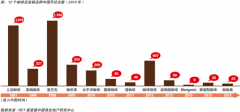
Research report on the Development trend of Korean Coffee shops in China
In the traditional impression, the European and American coffee shop brand Starbucks has been the "coffee shop scenery" in major cities for a long time, but in recent years, similar to popular film and television dramas, fashion clothing and other fields, there has also been a "Korean wave" in the coffee shop field.

Li Haitao: the "one, two, three" strategy helps the development of Pacific Coffee Enterprises
According to statistics, the coffee industry is growing at an annual rate of 25%. It is estimated that by 2020, the capacity of China's coffee market will reach 300 billion, which is expected to become an important increase in the catering industry. As a result, a large number of chain coffee brands have appeared in China, deducing their imagination of the Chinese coffee market. At the same time, Pacific Coffee (Special Reading) has been in mainland China for 6 years.

The spread History of Coffee in China introduction to the characteristics of Flavor and Taste of Coffee Bean cultivation in Yunnan
According to historical records, Taiwan's planting was successful for the first time in 1884. Since then, coffee trees have been planted in China, and coffee cultivation in mainland China began in Yunnan. In 1902, a French missionary named Tian introduced seeds from Yinggong and planted them in Binchuan County, Yunnan Province. it is located in a place called Zhu Kula, which is located on the bank of the Yushan River, a tributary of the Jinsha River

Open to join, push hand to make coffee. What game of chess is Pacific Coffee playing?
Cafes in China are affected by the market environment, with many brands and rich forms. they are the product of experience economy, with high-end well-known chain brands and independent small shops with different tastes. At the same time, as a panacea that can be used in a variety of ways, it can also be mixed with different formats. The whole coffee industry market is in a period of rapid development in which a hundred flowers blossom. Face the fierce competition
Pacific Coffee: strengthen the orientation of Chinese elements, the first choice for business and culture
The brand concept of Pacific Coffee with one cup and one world is inspired by the hard spirit of Hong Kong people. when its founder traveled to Hong Kong from Seattle, he realized that Hong Kong people were working hard for life, hoping to provide a breathing space for Hong Kong people in the busy city by setting up a coffee shop and cheer up the energetic Hong Kong people with fragrant coffee. finally,

Yunnan coffee industry creates a brand era with the help of e-commerce
At present, Yunnan Province has become the largest coffee bean production and export base in China, in which coffee cultivation has a history of more than 100 years, and now it has become one of the typical representatives of Yunnan plateau characteristic agriculture.

[pro bono coffee flower sharing contest] see you in Guangzhou on April 30!
Behind-the-scenes players of the pro bono coffee pull competition on April 30, 2017, a group of coffee fans with coffee as the core set up a communication platform because of their common hobbies. Founder Actinium Chok adheres to the original intention that nothing is a cup of coffee handsome and unites a group of coffee lovers from different places. At present, the majority of behind-the-scenes players are Guangzhou and Foshan, and

Shanghai Free Trade Experimental Zone Coffee Trading Center
The coffee trading center of the Shanghai Free Trade Experimental Zone, which arises at the historic moment from Yunnan-Shanghai business cooperation, has been checked and accepted by the Municipal Commercial Commission, the Municipal Finance Office, the Free Trade pilot Zone Management Committee, and other units. In the near future, it will trade and display from offline to online to the whole world. Since the coffee trading center of Shanghai Free Trade Experimental Zone has been accepted by relevant departments for business cooperation between Yunnan and Shanghai for one year, the two sides have established interconnection.
Pacific Coffee Waffles on the Market in Pacific Coffee3 month
PacificCoffee3 month Pacific Coffee Waffles listed GE GE drove to Pacific Coffee to meet the spring breeze, GE drove to Pacific Coffee! Many people call them waffles, but they prefer to be called Gege. After they came to the East from Belgium, they were deeply influenced by Chinese culture and practiced painstakingly. Under the careful preparation of Pacific Coffee, they developed a pair of pine.

Coffee chain companies open new fronts in the office
Beijing Business News (Reporter Li Duo Chen Keyuan) In Starbucks, coffee accompany you and other coffee chain brands have announced the expansion of stores in China, competing for scattered consumers, Pacific Coffee will target enterprise users, trying to move the coffee shop directly into the office. Pacific Coffee recently announced that it has partnered with Regus to launch Business + Coffee Professional Services to provide industry services to corporate customers.

Introduction to El Salvador Himalayan Coffee Manor with mild sour, bitter and sweet taste
El Salvador's domestic topography is mainly mountainous, plateau, volcanic, known as the country of volcanoes, Santa Ana active volcano 2385 meters above sea level, the highest peak in the country; the northern part of the country is the Lompa Valley and the southern part is the narrow coastal plain. El Salvador has a tropical climate with an annual average temperature of 28 ℃. November-April is the dry season and May-October is the rainy season. The coastal and lowland climate is hot and humid, with mountains.